Acquiring a new customer costs anywhere from 5 to 25 times more than keeping an existing one, which is exactly why customer churn deserves far more attention than it usually gets. Most cafes, salons, and local retailers watch a handful of regulars vanish every month without ever knowing why, and by the time the empty chairs are obvious, the revenue is already gone. This sits alongside our broader customer retention strategy guide - churn is the loss side of that equation.

Key Takeaways
- Customer churn is the rate at which previously regular customers stop visiting your business over a given period.
- Small business churn is usually silent. Customers drift away rather than complain, so there’s no warning sign unless you’re tracking visit data.
- The four biggest drivers of local business churn are a bad experience, having no reason to return, being forgotten, and a competitor offering more.
- You can calculate a rough churn rate using simple visit-frequency records, no complex reporting required.
- Win-back messaging, fixing the root experience issue, and offering a genuine loyalty incentive are the three most effective ways to reduce churn.
- Tools like the LTV Loyalty feature set can automate the detection and win-back process so you’re not relying on memory or guesswork.
What Is Customer Churn for a Small Business?
Customer churn for a small business simply means the loss of customers who used to visit regularly but have stopped.
It’s different from a one-off customer who never returns because they were just passing through. Churn specifically refers to regulars who disappear - the coffee drinker who came in three times a week and hasn’t been seen in two months, or the hairdresser client who used to book every six weeks and quietly started going elsewhere.
For local businesses, churn matters more than almost any other metric because regulars are disproportionately valuable. A small group of loyal customers often accounts for the majority of daily revenue, so losing even a few can shift a profitable week into a break-even one.
How to Calculate a Churn Rate for Your Small Business
You don’t need enterprise software to get a useful churn number. A simple formula works fine for a cafe, salon, or local service business.
Churn Rate = (Customers Lost During Period ÷ Customers at Start of Period) × 100
For example, if you had 200 regulars at the start of the quarter and 24 of them haven’t returned by the end of it, your churn rate is 12%.
To make this work, you need a definition of “regular” that fits your business. That might be:
- Anyone who visited at least twice in the previous 60 days
- Anyone enrolled in your loyalty program or on your customer list
- Anyone who booked a repeat service in the last quarter
Once you’ve set that baseline, you simply track who drops out of it over each period. This is a churn calculation, not a lifetime value calculation, so we’re deliberately keeping it simple here. If you want to understand what a lost customer actually costs you in dollar terms, our guide to calculating customer lifetime value covers that as a separate exercise worth doing alongside your broader retention planning.

Why Customer Churn Happens Quietly (And Why That’s Dangerous)
Almost nobody tells you they’re leaving. Customers don’t send an email explaining that the coffee was cold last Tuesday or that a competitor opened closer to home.
Instead, they just quietly reduce their visits. Three times a week becomes twice, then once, then nothing, and there’s no single moment that flags the problem.
This slow drift is what makes customer churn so dangerous for small businesses. Without a system watching visit frequency, the first time you notice is when the till roll looks thinner than usual, months after the customer actually decided to leave.
By the time you notice the pattern in your revenue, the customer has likely already formed a new habit somewhere else. Early detection is the only real defence, and it depends entirely on data you may not currently be collecting.
The Main Causes of Customer Churn in Local Businesses
Churn rarely comes from one dramatic event. It’s usually one of four fairly predictable causes, and each requires a different fix.
1. A Bad Experience They Didn’t Mention
A slow service, an order mix-up, or a rude interaction can be enough to send a regular elsewhere. Most unhappy customers don’t complain, they simply don’t come back, which is what makes this cause so easy to miss.
2. No Reason to Return
If every visit feels identical and there’s no incentive to keep choosing you over the next option, customers eventually stop bothering. Habit alone isn’t loyalty, and without a reason to keep choosing you, convenience will win out.
3. Feeling Forgotten by the Business
Regulars who feel like just another transaction, rather than a recognised customer, are far more likely to drift. A birthday message, a “we’ve missed you” note, or simple recognition at the counter goes a long way toward making someone feel remembered.
4. A Competitor Offering More
New openings, better loyalty perks, or more convenient hours from a nearby competitor can pull regulars away, especially if your own offer hasn’t evolved. Churn for small business owners often accelerates the moment a new competitor enters the local market.
67% of churn can be avoided if the issue is resolved on the first encounter.
- Danielle Ingrao, Fusebill (cited via US Chamber of Commerce, CO—)
How to Detect Small Business Customer Churn Early Using Visit-Frequency Data
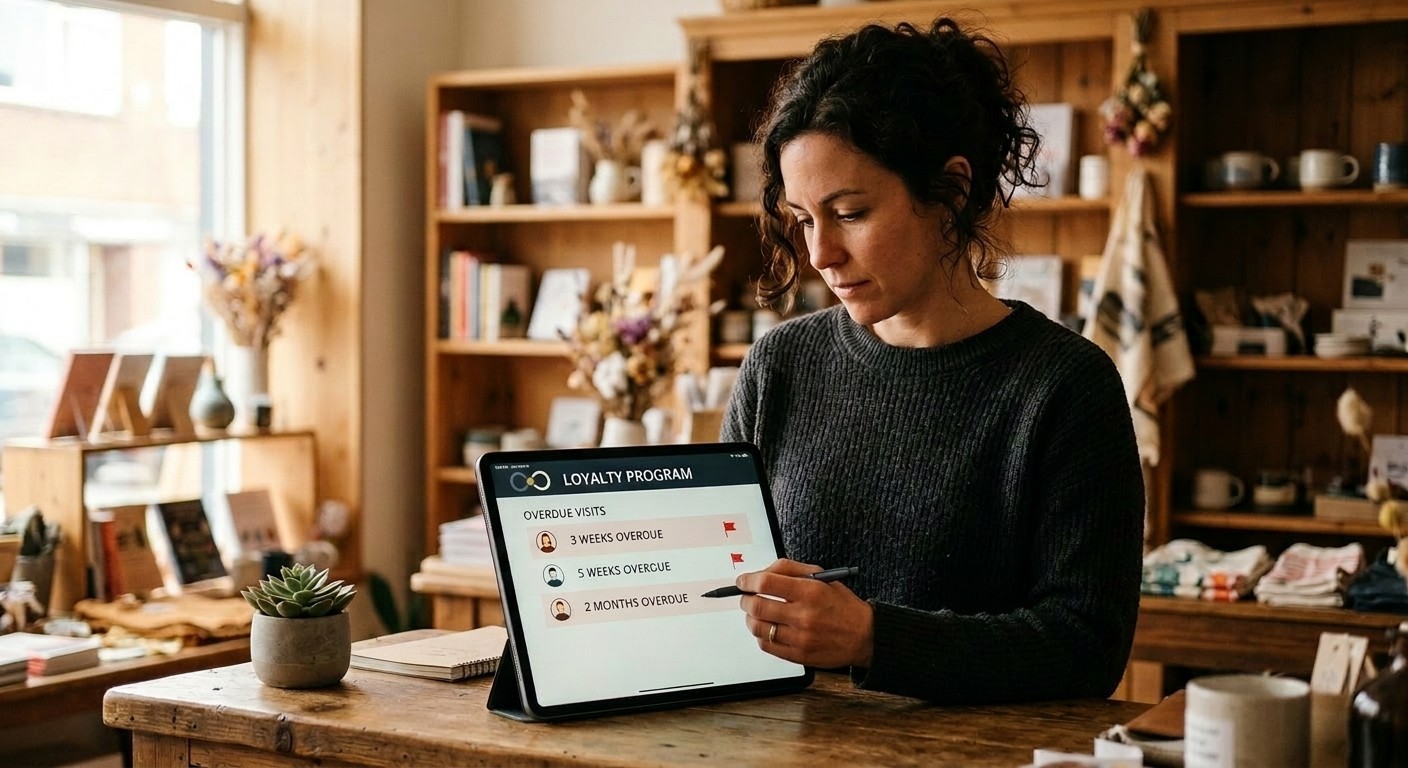
The single best early-warning signal for customer churn is a change in visit frequency. Someone who used to come in weekly and hasn’t shown up in three or four weeks is showing you the exact moment they started drifting.
To catch this, you need three basic pieces of information for every customer:
- Their typical visit interval (weekly, fortnightly, monthly)
- The date of their last visit
- How far past their normal interval they currently are
Manually tracking this across hundreds of customers isn’t realistic for most small businesses, which is why automated systems matter. A digital loyalty card that lives in a customer’s phone wallet can quietly log every visit, and platforms built around this data can flag anyone who’s fallen outside their usual pattern. Our overview of how automated loyalty tracking works shows how this kind of visit-frequency monitoring happens without any extra effort from staff at the counter.
The goal is to catch drift while it’s still recoverable, ideally within the first missed visit cycle, rather than three months later when the habit is already broken.
Practical Ways to Reduce Customer Churn: Win-Back Messaging
Once you’ve identified a customer who’s gone quiet, a simple, well-timed message can bring a surprising number of them back. This is called win-back messaging, and it works because most churned customers haven’t made a firm decision to leave forever - they’ve just stopped thinking about you.
Effective win-back messages tend to share a few traits:
- They’re sent within days of the customer falling outside their normal visit window, not months later
- They acknowledge the absence directly (“We’ve missed you”) rather than pretending nothing happened
- They include a small, genuine incentive to make the next visit easy to justify
- They’re personal enough to feel like a message from a business that noticed, not a mass broadcast
Manually sending these messages one by one doesn’t scale past a handful of customers. This is exactly the kind of task that benefits from automation, where a system flags the lapsed customer and sends the message on your behalf, without you needing to remember who’s overdue for a visit. For a full breakdown of segmentation, message sequencing, and offer sizing, see our dedicated guide on running a win-back campaign.
Fixing the Underlying Experience Issue Behind Your Churn
A win-back message can bring someone through the door once, but if the original problem is still there, they’ll drift again. This is why reducing customer churn has to include an honest look at the experience itself.
A few practical steps help here:
- Ask directly. A short, low-pressure question to a lapsed customer (“Anything we could have done better?”) often surfaces issues you’d never otherwise hear about.
- Look for patterns, not one-off complaints. If three different customers mention the same wait time or the same staff interaction, that’s a systemic issue worth fixing.
- Close the loop publicly. If you fix a known issue, mention it. Regulars notice when a business visibly improves.
This step is less about marketing and more about operations, but it’s often the difference between a win-back message that works once and one that keeps the customer for good.
Using Loyalty Incentives to Stop Customer Churn Before It Starts
The strongest defence against churn isn’t reacting to it, it’s removing the reason for it to happen in the first place. A well-structured loyalty incentive gives customers an ongoing reason to keep choosing you over a competitor.
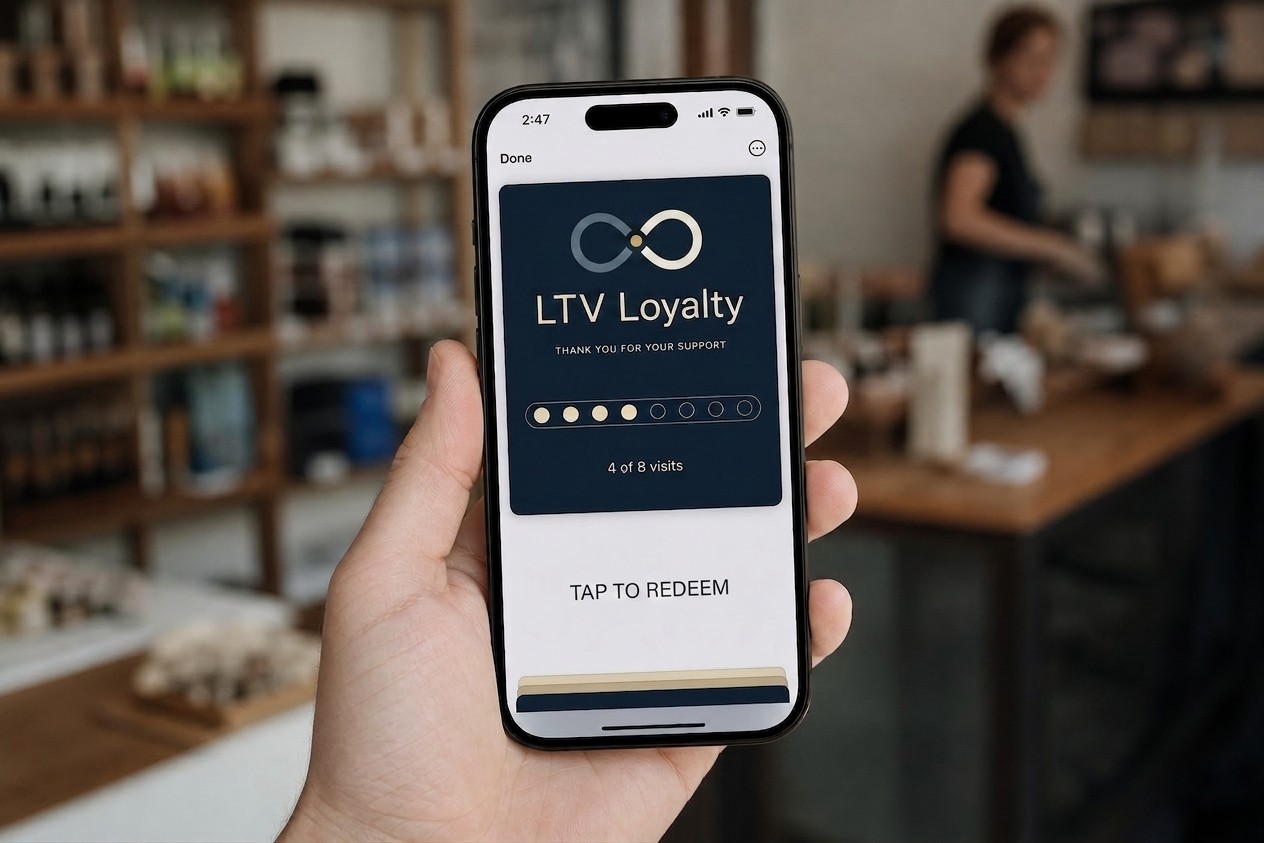
This doesn’t need to be complicated. A simple stamp card, a points system, or a small cashback reward can all work, provided the customer can see clear progress toward something worthwhile.
What matters more than the mechanic is visibility and consistency. A loyalty card sitting in a drawer at home gets forgotten, but one that lives in a customer’s phone wallet stays visible every time they open it to pay.
Our loyalty features overview covers the different card types available, from stamp cards through to membership tiers, so you can match the incentive to how your customers actually behave. If you’re weighing up whether the investment makes sense for your business size, our pricing page breaks down what’s included at each plan level. And if you’re tempted to reach for a discount instead of a loyalty mechanic, our loyalty vs discounting guide breaks down why that trade-off matters more than it looks.
Bringing It Together: A Simple Churn-Reduction Routine
Reducing customer churn doesn’t require a complicated system, it requires a consistent one. Here’s a routine most local businesses can realistically maintain:
| Step | Action | Frequency |
|---|---|---|
| 1. Monitor | Track visit frequency against each customer’s normal pattern | Ongoing / automated |
| 2. Flag | Identify anyone who’s fallen outside their usual window | Weekly |
| 3. Reach out | Send a personal win-back message with a genuine incentive | Within days of flagging |
| 4. Investigate | Ask what went wrong for anyone who doesn’t respond | Monthly review |
| 5. Reinforce | Keep loyalty incentives visible and worthwhile | Ongoing |
Doing this manually across a growing customer base gets difficult fast, which is why most small businesses eventually move toward an automated system for at least the monitoring and messaging steps. If you’d like to see what that looks like for your specific setup, booking a short demo is a fast way to find out.
Conclusion: Treat Customer Churn as a Solvable Problem, Not a Cost of Doing Business
Customer churn for small business owners isn’t inevitable, but it is easy to ignore until it shows up in your revenue. The businesses that manage it well aren’t necessarily offering the biggest discounts, they’re the ones paying attention to visit patterns, responding quickly when a regular goes quiet, and giving customers a genuine reason to keep coming back.
Start with a simple churn rate calculation, watch for the quiet drift rather than waiting for complaints, and address the four common causes before they cost you a customer for good. Reducing churn is one part of a wider retention approach, but it’s the part that stops the leak before you can even think about growth.
Frequently Asked Questions
What counts as customer churn for a small business?
Customer churn for a small business refers to previously regular customers who stop visiting over a given period. It’s different from a one-time visitor who was never a repeat customer to begin with.
How do I calculate my small business churn rate?
Divide the number of regulars you lost during a period by the number of regulars you had at the start, then multiply by 100. For example, losing 24 out of 200 regulars in a quarter gives you a 12% churn rate.
Why do customers leave a local business without complaining?
Most customers simply reduce their visits gradually rather than announcing they’re unhappy, a pattern often called “drift.” Without visit-frequency tracking, this quiet departure is nearly impossible to catch until it’s already reflected in lower revenue.
What’s the biggest cause of customer churn in cafes and local shops?
The most common causes are a poor experience the customer never mentioned, a lack of ongoing reason to return, feeling forgotten by the business, or a competitor offering something better. Each cause needs a different fix, so identifying which one applies matters more than applying a generic solution.
Is a loyalty program actually effective at reducing churn?
A well-designed loyalty incentive gives customers a visible, ongoing reason to keep choosing your business over a competitor, which directly addresses one of the main churn causes. It works best when it’s easy to see and use, such as a digital card in a customer’s phone wallet rather than a paper card left at home.
How quickly should I send a win-back message to a lapsed customer?
Ideally within days of the customer falling outside their normal visit pattern, rather than weeks or months later. The longer you wait, the more likely the customer has already formed a new habit elsewhere.
Is tracking customer churn worth the effort for a small local business?
Yes, because regulars typically make up the majority of a small business’s revenue, and losing even a small percentage of them has an outsized impact on takings. Affordable, automated tools now make tracking and reducing customer churn far more accessible for small operators than it used to be.