If you run a cafe, retail shop or local service business, calculating customer lifetime value is one of the most useful financial exercises you can do this year. Acquisition costs have climbed sharply over the past decade, which means the businesses that come out ahead are the ones that know exactly what a loyal customer is worth over time, not just what they spend on their first visit. This sits underneath our broader customer retention strategy guide - LTV is the number that should drive most of those retention decisions.

Key Takeaways
- LTV measures total value, not one sale. Customer lifetime value calculates the total revenue (or profit) a customer generates across their entire relationship with your business.
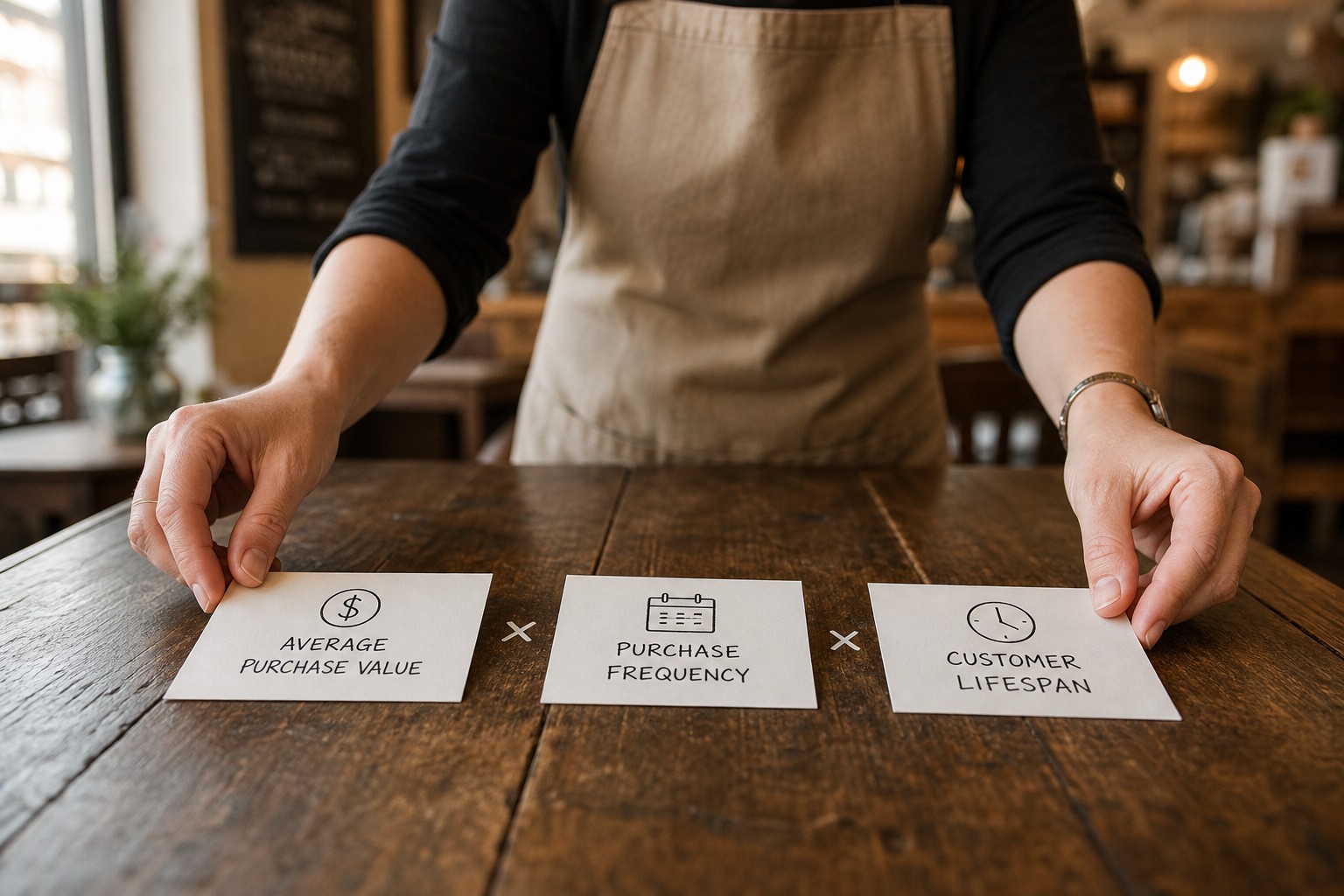
- The formula is simple: Average Purchase Value × Purchase Frequency × Customer Lifespan.
- Retention beats acquisition. Existing customers convert at a 60-70% rate compared to just 5-20% for new prospects, so LTV should guide where you spend your next marketing dollar.
- Manual tracking is unreliable. Spreadsheets and gut-feel estimates miss the visit frequency and repeat-purchase data that make LTV accurate.
- Digital tools remove the guesswork. A digital loyalty program automatically captures the visit and spend data LTV depends on.
- LTV should set your retention budget. Knowing what a customer is worth tells you exactly how much you can afford to spend keeping them.
What Is Customer Lifetime Value and Why It Matters for a Small Business
Customer lifetime value (LTV, sometimes written CLV) is the total amount of revenue or profit a single customer generates for your business over the entire time they buy from you.
It’s not a single transaction figure. It’s a forward-looking number that accounts for every coffee, haircut, retail purchase or service booking a customer makes with you, from their first visit until they stop coming back.
For a small business, this number matters more than almost any other metric you track. It tells you how much you can reasonably spend to win a new customer, how valuable your regulars really are, and where your retention efforts deliver the best return.
Without an LTV calculation, small business owners tend to treat every sale the same. A $5 coffee looks identical whether it’s a one-off visitor or a customer who’ll spend $5 twice a week for the next three years, and that’s a costly blind spot.
The Standard LTV Formula for a Small Business
The good news is that you don’t need a data science background to get a workable LTV figure. The standard formula uses three inputs most small businesses already have on hand.
LTV = Average Purchase Value × Purchase Frequency × Customer Lifespan
Here’s what each part means in plain terms:
- Average Purchase Value - total revenue over a period, divided by the number of purchases in that period.
- Purchase Frequency - how many times an average customer buys from you in a given period (usually a year).
- Customer Lifespan - the average number of years (or months) a customer keeps coming back before they stop.
Multiply the three together and you get a dollar figure representing what an average customer is worth across their whole relationship with your business. Some businesses also apply a profit margin to the result to get a more conservative, profit-based LTV rather than a revenue-based one.
A Worked Example: Calculating LTV for a Small Cafe
Numbers make this concept click faster than theory, so let’s run a realistic example using a suburban cafe.
Say the average customer spends $8 per visit (a coffee and a pastry), visits three times a week, and keeps coming back for an average of two years before moving away or changing habits.
| Variable | Value | Calculation Basis |
|---|---|---|
| Average Purchase Value | $8 | Coffee + pastry per visit |
| Purchase Frequency | 156 visits/year | 3 visits per week × 52 weeks |
| Customer Lifespan | 2 years | Average retention period |
| Customer Lifetime Value | $2,496 | $8 × 156 × 2 |
That single regular customer is worth almost $2,500 to this cafe over two years, not the $8 the till shows on any given morning.
Now compare that to a retail example. A local boutique with an average sale of $65, two purchases per year, and a three-year customer lifespan lands on an LTV of $390 per customer.
Neither number is “right” or “wrong” on its own. What matters is that both business owners now know what a customer relationship is actually worth, which changes every decision about marketing spend, loyalty rewards and service quality from that point forward.
The probability of selling to an existing customer sits between 60% and 70%. For a brand-new prospect, that probability drops to somewhere between 5% and 20%. Source: Marketing Metrics (cited via Forbes)
Common Mistakes When Calculating LTV for a Small Business
Getting the formula right is only half the battle. Most small business owners undermine their own LTV numbers with a handful of avoidable errors.
Using Revenue Instead of Profit
A customer spending $3,000 a year with you on low-margin products isn’t necessarily more valuable than one spending $1,500 on high-margin services. Wherever possible, apply your gross margin to purchase value so LTV reflects actual profitability, not just top-line sales.
Guessing Customer Lifespan
Many owners estimate lifespan based on how long they “feel” customers stick around, rather than tracking actual first-visit and last-visit dates. This single guess can throw the entire calculation out by a factor of two or three.
Averaging Across Very Different Customer Groups
Blending your weekly regulars with once-a-year visitors into a single average hides the customers who matter most. A segmented view, such as high-frequency versus low-frequency buyers, gives a far more useful LTV figure for decision-making.
Ignoring Seasonality
A cafe near a beach or a retail store near a school will see purchase frequency swing dramatically across the year. Calculating LTV from a single busy month (or a single quiet one) skews the number in either direction.
Never Updating the Number
LTV isn’t a set-and-forget figure. Prices change, habits shift, and competitors open down the road, so the calculation needs revisiting at least twice a year to stay useful.

How LTV Should Inform Your Marketing and Retention Spend
Once you know your customer lifetime value, the next question is what to do with it. This is where LTV moves from an interesting number to a practical business tool.
A simple rule many small businesses apply is the LTV-to-CAC ratio: if a customer is worth $2,500 over their lifetime, spending $50 to $100 to acquire them through advertising or promotions is easily justified. Spending $500 to acquire the same customer would not be.
LTV also tells you how much you can afford to invest in keeping customers happy once they’ve made their first purchase. A free coffee every tenth visit, a birthday discount, or a small loyalty reward all cost money, but if they extend a customer’s lifespan by even a few months, the return dwarfs the cost.
Acquiring a new customer typically costs 5 to 25 times more than retaining an existing one. Source: Harvard Business Review
This is precisely why a broader customer retention strategy should start with LTV. Once you know the number, retention spend stops being a guess and starts being a calculated investment with a predictable payoff, whether that spend goes toward a loyalty program, a win-back campaign for lapsed customers, or simply tracking repeat customer rate month to month.
It’s also worth noting that not all customers deserve equal retention spend. Under the Pareto principle, a small share of customers typically generates a disproportionate share of revenue, so identifying your highest-LTV segment and directing extra attention their way (priority service, personalised offers, early access to new products) usually delivers a better return than spreading retention budget evenly across everyone.
Why Manual LTV Estimation Falls Short for Small Business Owners
Here’s the uncomfortable truth: most small businesses that attempt an LTV calculation by hand get it wrong, not because the formula is difficult, but because the underlying data is messy or missing entirely.
Purchase frequency requires knowing exactly how often each customer visits, which is nearly impossible to track accurately from a cash register or a basic point-of-sale system. Customer lifespan requires knowing when a customer’s very first purchase happened and whether they’ve genuinely stopped coming back or are simply between visits. Average purchase value needs clean, itemised transaction data rather than end-of-day totals.
Add it all up and it’s easy to see why LTV is so hard to pin down manually, even for owners who are diligent about their books.
How a Digital Loyalty Program Makes LTV Easier to Track
This is exactly the gap a digital loyalty program is built to close. Every time a customer scans in, redeems a reward, or receives a push notification, the system logs a real data point that feeds directly into your LTV inputs.
Instead of estimating purchase frequency from memory, you can see exactly how often each customer visits. Instead of guessing lifespan, you can see the date of first visit and the date of last activity for every single customer on file.
- Automatic visit tracking replaces manual guesswork on purchase frequency.
- Repeat purchase rate is calculated automatically rather than estimated from a sample of regulars.
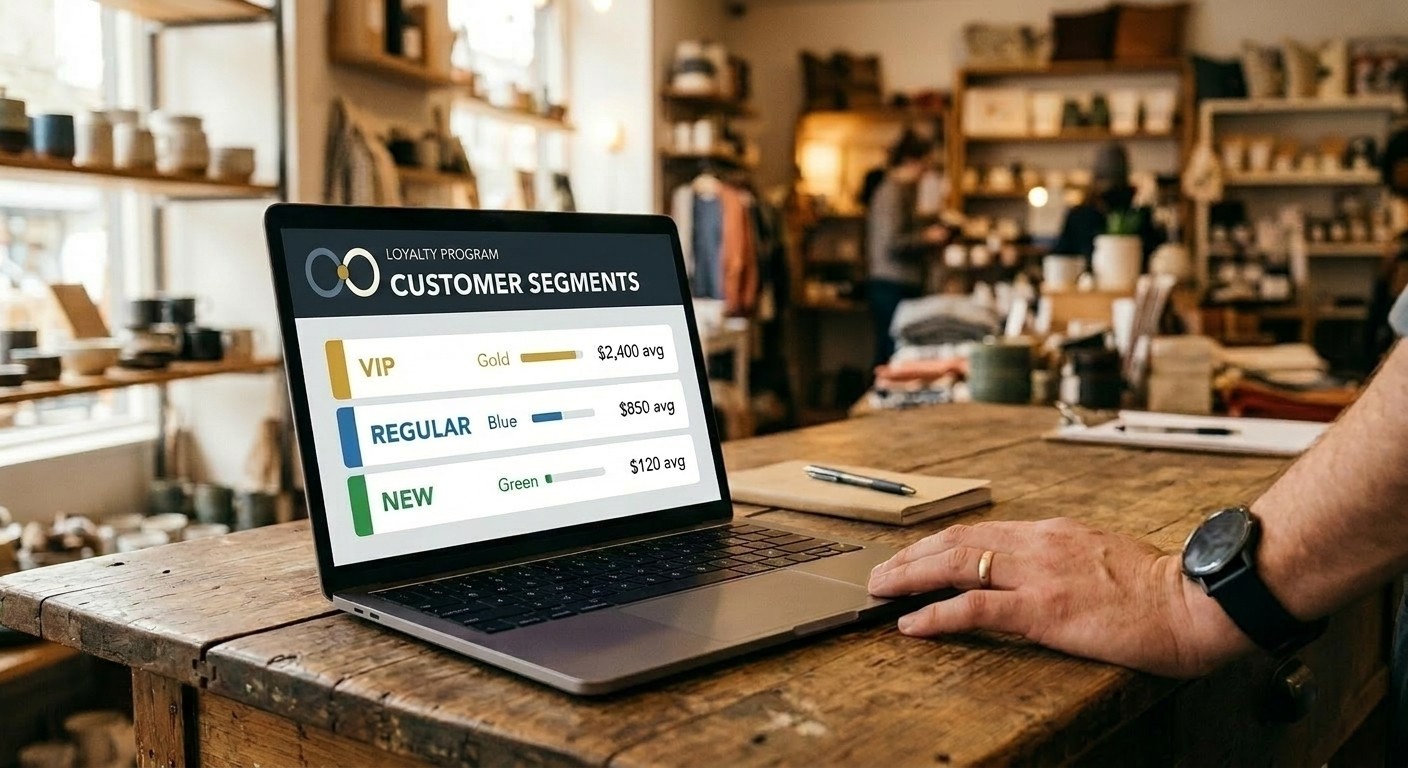
- Segmented reporting separates high-value customers from occasional visitors, avoiding the “blended average” mistake.
- Ongoing data capture means your LTV figure updates itself rather than going stale after a single manual calculation.
Platforms built around RFM analytics and reporting (recency, frequency, monetary value) essentially do the LTV maths for you in real time, using actual transaction data rather than assumptions.
Turning Your LTV Number Into Action
Calculating LTV is only valuable if it changes what you do next. Once you have a reliable LTV figure for your small business, use it to set concrete limits and targets.
Decide on a maximum acceptable acquisition cost based on your LTV-to-CAC ratio. Set a retention budget per customer that’s proportional to what they’re worth. Identify your top customers by LTV and build a specific plan to keep them, whether that’s a tiered rewards structure or simply more personal attention when they come in.
Automated tools such as a digital loyalty platform take this a step further by using the data they capture to trigger retention actions automatically - sending a push notification when a regular hasn’t visited in a while, or flagging when repeat purchase rate starts to drop for a particular customer segment.
If you want to see how this looks in practice for a business like yours, the team behind LTV Loyalty can walk you through it. You can book a demo to see the reporting in action, browse the resources library for further reading on retention strategy, or get in touch with specific questions about your setup.
Conclusion
A reliable LTV calculation gives small business owners something most competitors don’t have: a clear, defensible number for what a customer is actually worth. Once you know that figure, marketing spend, retention budgets and loyalty rewards all become decisions backed by data rather than guesswork.
The formula itself is simple. Average Purchase Value × Purchase Frequency × Customer Lifespan gets you most of the way there, and a worked example using your own numbers takes only a few minutes.
The harder part is keeping that number accurate over time, which is exactly where manual tracking tends to fall down and digital loyalty data steps in. If you’re ready to move from a one-off spreadsheet estimate to an always-current LTV figure, exploring a digital loyalty program is the logical next step.
Frequently Asked Questions
What is a good customer lifetime value for a small business?
There’s no universal benchmark, but a useful rule of thumb is that your LTV should be at least three times your customer acquisition cost. What counts as a “good” figure varies enormously by industry and price point, so the most useful comparison is against your own trend over time.
How often should I recalculate customer lifetime value?
Small businesses should recalculate LTV at least twice a year, and more often if prices, customer behaviour or seasonality shift noticeably. A digital loyalty program updates the underlying data continuously, so the number stays current without extra manual work.
What’s the difference between LTV and CAC?
Customer lifetime value (LTV) measures what a customer is worth over their entire relationship with your business, while customer acquisition cost (CAC) measures what it costs to win them in the first place. Comparing the two (the LTV-to-CAC ratio) tells you whether your marketing spend is actually profitable.
Can I calculate LTV without loyalty software?
Yes, you can calculate a basic LTV using spreadsheets and point-of-sale reports, but the inputs (especially purchase frequency and lifespan) are often estimates rather than exact figures. This makes manual LTV calculation rough by nature, whereas loyalty program data captures these figures automatically.
Is customer lifetime value more important than customer acquisition for small business?
LTV and acquisition work together, but for most small businesses, retention delivers a far better return since acquiring a new customer typically costs 5 to 25 times more than retaining an existing one. This is why LTV should guide how much of your budget goes toward keeping existing customers happy versus chasing new ones.
How does a loyalty program actually improve my LTV, not just help me measure it?
A well-designed loyalty program increases purchase frequency (through rewards and reminders) and extends customer lifespan (through ongoing engagement), both of which directly raise the LTV figure itself, not just your ability to track it. Features like automated push notifications and tiered rewards give customers a reason to return sooner and stay longer.
What does customer lifetime value tracking software typically cost for a small business?
Pricing varies depending on the features included, such as automated CRM data capture, scanner apps and RFM analytics reporting. It’s best to check a provider’s current pricing page directly, since plans and inclusions can change over time.