Digital loyalty cards have quietly become one of the highest-return tools available to small business owners, and the numbers back it up: increasing customer retention by just 5% can lift overall profitability by 25% to 95%, according to Bain & Company research published in Harvard Business Review. If you run a cafe, a retail shop, or a local service business, this guide walks through exactly what digital loyalty cards are, how they work in practice, and what to look for before you pick a platform.
Key Takeaways
| Question | Quick Answer |
|---|---|
| What is a digital loyalty card? | A loyalty card that lives on a customer’s phone (usually in Apple Wallet or Google Wallet) instead of a physical punch card, tracking stamps, points, or rewards automatically. |
| Do customers need to download an app? | No. Most modern digital loyalty card systems add the card straight to the phone’s native wallet with a tap or scan. |
| What mechanics can a digital loyalty card use? | Stamp cards, points, cashback, paid membership, and referral rewards are the five most common structures. |
| Are digital loyalty cards better than paper punch cards? | Yes, for most businesses. They can’t be lost or forgotten, they let you send push notifications, and they give you real customer data paper never can. |
| What does a digital loyalty platform typically cost? | Plans generally scale with business size; see current tiers on the pricing page rather than relying on figures that go stale. |
| Is customer data safe with digital loyalty cards? | Reputable platforms encrypt data and never expose card numbers, but you should still check a provider’s security practices before signing up. |
What Is a Digital Loyalty Card, Exactly?
A digital loyalty card is a rewards card that exists entirely on a customer’s smartphone rather than as a piece of laminated cardboard.
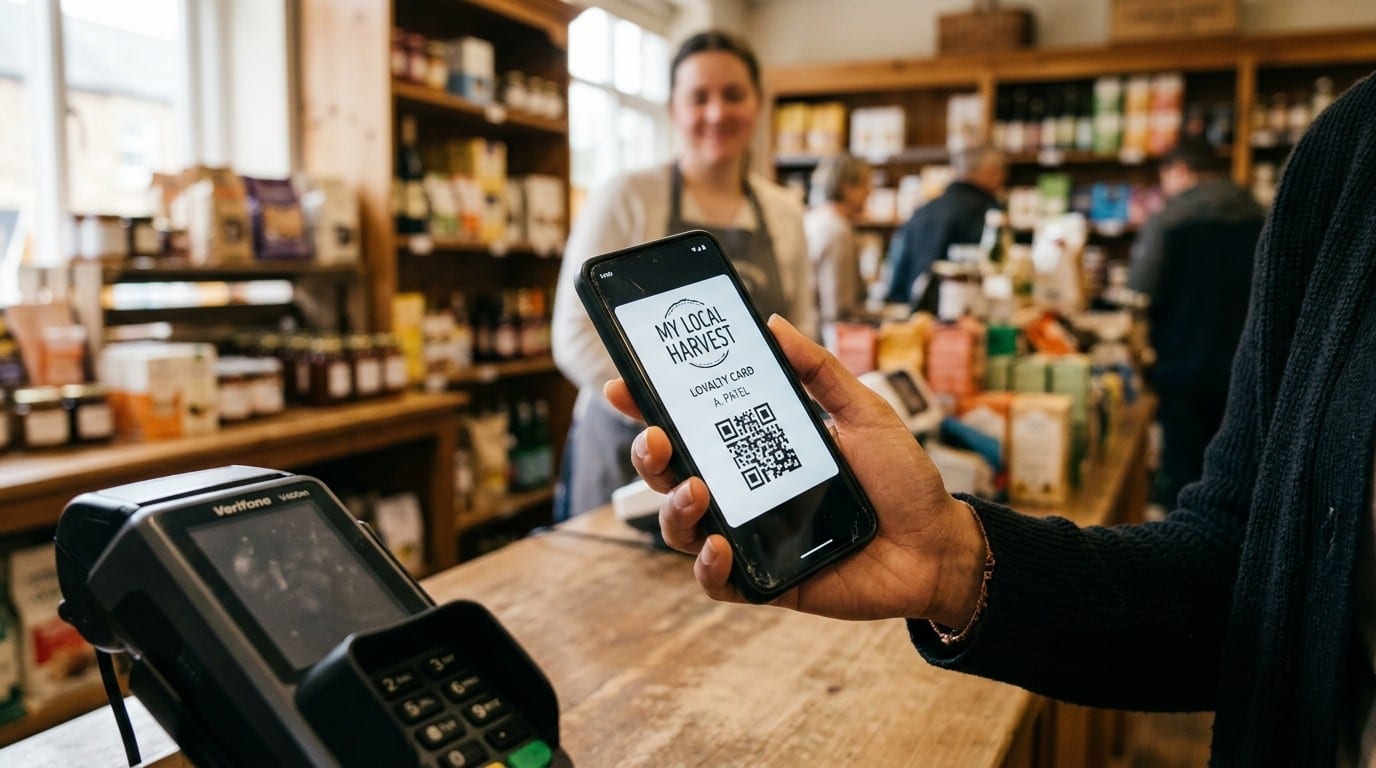
Instead of handing over a paper card to get hole-punched, the customer holds up their phone and a staff member scans a QR code or barcode. The card itself typically sits in the phone’s native wallet app: Apple Wallet on iPhone or Google Wallet on Android.
Behind the scenes, every scan updates a central record of that customer’s visits, spend, and rewards progress in real time. This is the core idea behind a digital loyalty card: the same loyalty concept small businesses have used for decades, just running on infrastructure that’s already in every customer’s pocket.
How Digital Loyalty Cards Work Day to Day
For the business owner, the daily workflow is simple. A new customer scans a QR code (often on a counter stand or receipt) to add the card to their wallet in seconds. From then on, staff scan the customer’s phone at each visit using a phone-based scanner app, and the system automatically records the stamp, point, or purchase.
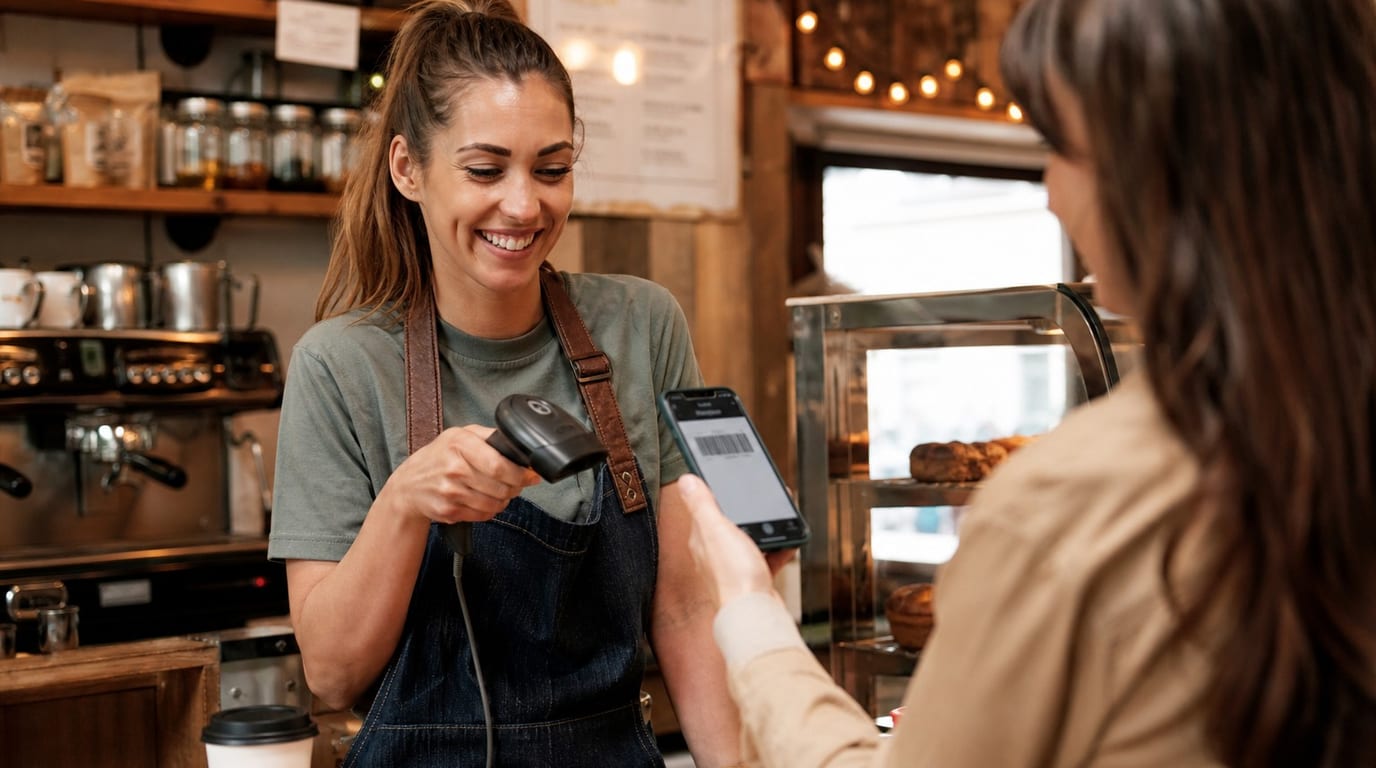
For the customer, there’s nothing to remember and nothing to carry. The card sits alongside their boarding passes and transit tickets, and many wallet apps will even surface it automatically when the customer is near the shop, thanks to location awareness built into the phone.
Behind this simple front end sits the actual engine of the system: automation that handles data capture, milestone tracking, and reward triggers without a staff member needing to do anything extra. That automation is what separates a genuinely useful digital loyalty card system from a card that just looks digital but still requires manual tallying.
Digital Loyalty Cards vs Paper Punch Cards
Paper punch cards have worked for small businesses for generations, so it’s fair to ask why so many owners are switching. Paper has three structural weaknesses digital solves outright:
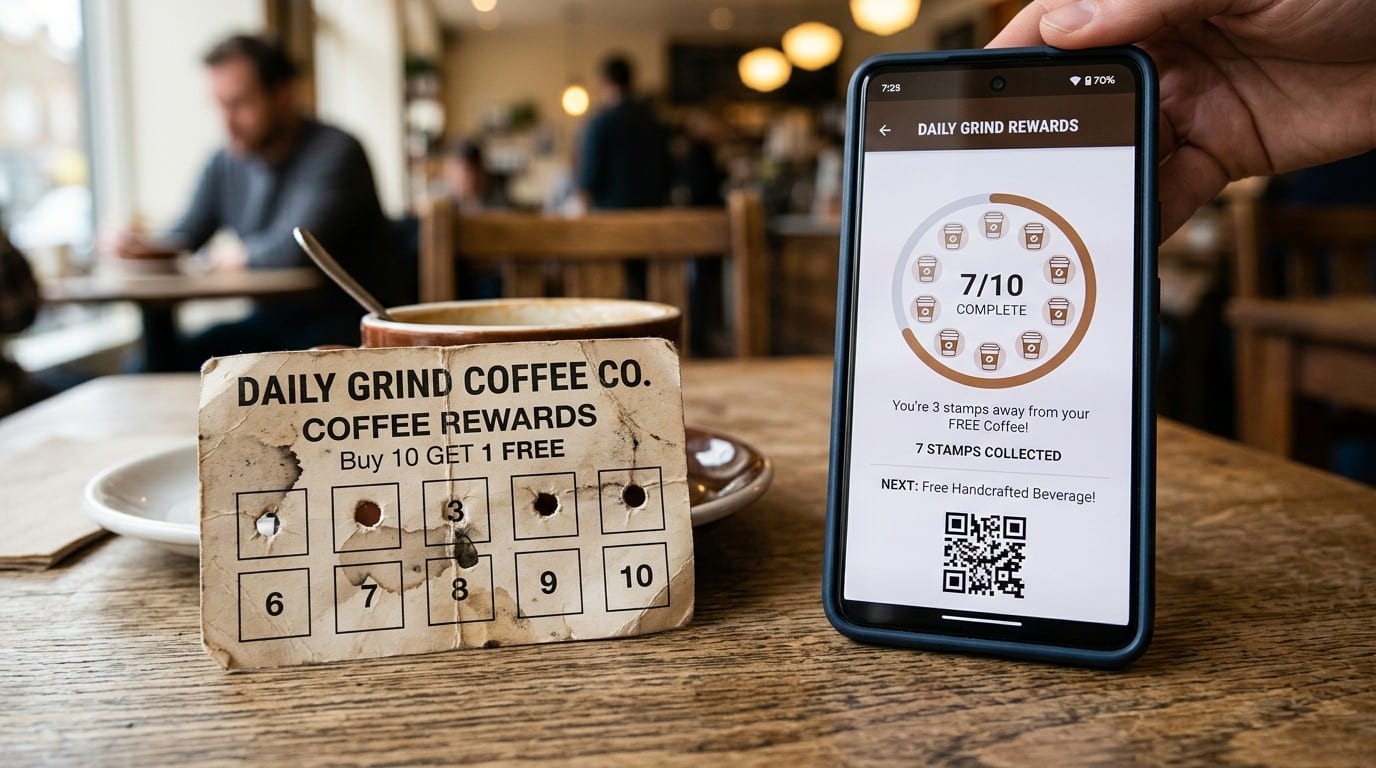
- Loss and damage. Paper cards get left at home, thrown in the wash, or lost in a bag. A digital loyalty card lives permanently on the phone the customer already carries everywhere.
- No communication channel. A paper card can’t tell a customer they’re one visit from a free coffee. A digital card can trigger a push notification the moment they’re close.
- Zero data. Paper tells you nothing about who your regulars are, how often they visit, or what they spend. Digital captures all of it automatically.
This isn’t just a convenience argument. It shows up in consumer behaviour. LoyaltyLion’s 2026 consumer research, based on a survey of 4,000 shoppers, found that 90% of shoppers say being a member of a loyalty program influences them to repeatedly purchase from the same brand, and 85% say being able to access a loyalty program in-store is important to them (exactly what a QR-scanned digital card delivers).
90% of shoppers say being a member of a loyalty program influences their decision to repeatedly purchase from the same brand. Source: LoyaltyLion, 2026 consumer research (4,000 shoppers surveyed)
Between the loss risk, the missing communication channel, and the lack of any real customer data, paper punch cards are hard to justify once a digital option is available at a similar or lower cost.
Core Loyalty Mechanics: Stamps, Points, Cashback, Membership, and Referral
Not every business should run the same kind of loyalty program, and the right mechanic depends on your margins, purchase frequency, and average spend. Here’s how the five most common structures compare:
| Mechanic | Best For | How It Works |
|---|---|---|
| Stamp Card | Cafes, takeaway, quick-service | Buy X, get one free. Simple, familiar, low setup effort. |
| Points | Retail, boutiques, salons | Points accumulate per dollar spent and unlock tiered rewards. |
| Cashback | Higher-ticket retail and services | A percentage of spend returns as store credit for the next visit. |
| Membership | Gyms, studios, subscription-style services | A paid or tiered membership unlocks perks, discounts, or priority access. |
| Referral | Any local business wanting word-of-mouth growth | Existing customers earn a reward when they bring in a new one. |
Many businesses run more than one mechanic at once, pairing a straightforward stamp card with a referral program to encourage new customer growth on top of repeat visits. The full range of card types on LTV Loyalty is worth browsing before you commit, since the right structure genuinely depends on your specific business model.
Apple Wallet and Google Wallet: Where Your Digital Loyalty Card Lives
The two platforms your customers already have on their phones are Apple Wallet (iPhone) and Google Wallet (Android), and any serious digital loyalty card provider needs to support both.
They work in broadly similar ways: a card is added with a tap, updates push automatically, and the card can appear on the lock screen when the customer is near your shop. There are meaningful differences in how each platform handles notifications, card design, and update timing, but a well-built digital loyalty platform abstracts those differences away so you don’t have to manage them separately.
For this overview, the key point is that your digital loyalty card should work seamlessly on whichever phone your customer happens to be holding, without them needing to know or care which wallet they’re using.
Choosing a Digital Loyalty Platform: What Actually Matters
Not all digital loyalty card providers are built the same, and the features that look impressive in a demo aren’t always the ones that matter day to day. When evaluating a platform for a small business, these factors matter most, in order:
- Wallet-native cards. The card should live in Apple Wallet and Google Wallet directly, not force customers to download a separate app.
- Automatic data capture. Every scan should feed a CRM automatically, without manual data entry from staff.
- Push notification capability. The platform should support geofenced or milestone-based alerts without needing a marketing team to run it.
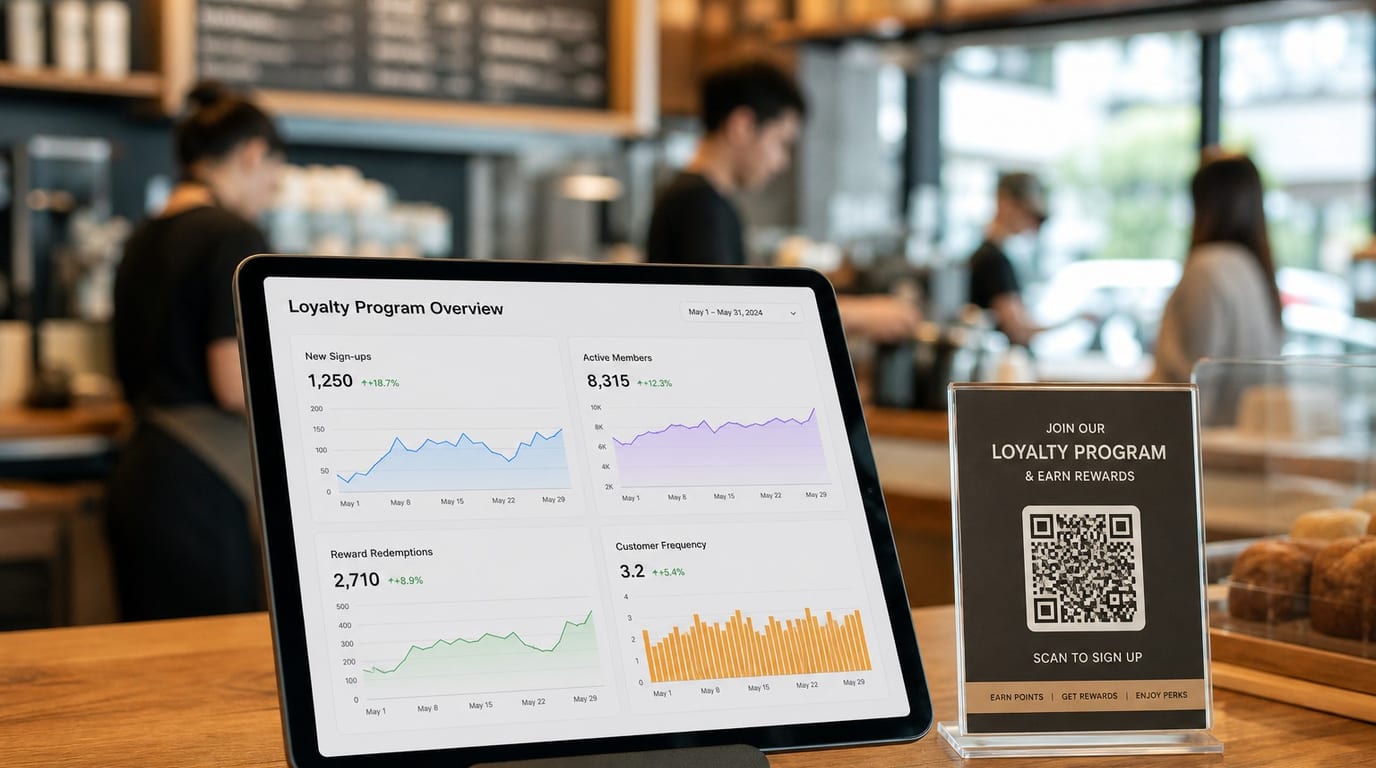
- Reporting you’ll actually use. Look for straightforward visit and revenue reporting rather than dashboards that need a data analyst to interpret.
- No hardware requirements. A scanner app that runs on any smartphone beats needing dedicated point-of-sale hardware.
- Transparent pricing. Check the provider’s pricing page to understand what’s included at each tier before you sign anything.
Most platforms structure pricing around business size and feature depth, moving from an entry tier for a single-location cafe up to a plan built for multi-location retailers. Rather than quoting numbers that go stale, current details are on LTV Loyalty’s pricing page.
A Brief Note on Security and Trust
Because a digital loyalty card holds a link between a real customer and their purchase history, security has to be taken seriously.
Look for providers that encrypt customer data in transit and at rest, never expose raw payment details through the loyalty card itself, and have a clear policy on how customer data is stored and used. This matters more than it might seem: data mishandling is one of the fastest ways a business can lose customer trust, and loyalty programs by nature hold more customer data than a typical transaction does.
A digital loyalty card is only worth adopting if the platform behind it treats customer trust as a design principle, not an afterthought. Ask any provider directly about their fraud prevention, duplicate-account handling, and data governance practices before you shortlist them - the answers should be clear and specific, not vague reassurances.
Getting Started With a Digital Loyalty Card
The practical rollout is usually faster than owners expect, often a matter of days rather than months. Broadly, it involves:
- Choosing a card mechanic (stamp card, points, cashback, or membership).
- Branding the card to match your logo and colours.
- Placing a QR code at the counter or on receipts.
- Letting automated push messages and notifications bring customers back without manual follow-up.
- Scanning and validating visits with the scanner app.
- Watching repeat visits and redemption rates climb on the dashboard.
You can see the full breakdown of this process on LTV Loyalty’s how it works page, and most businesses go from sign-up to a live card in under a week. If you’d rather see it running before committing to a plan, it’s worth booking a demo to watch the whole flow on a real device.
Conclusion
Digital loyalty cards give small businesses a practical, low-friction way to turn one-time visitors into regulars, without the downsides that have always limited paper punch cards. Whether you run a cafe wanting a simple stamp card or a retailer building out points, cashback, membership, and referral programs together, the mechanics are flexible enough to match almost any business model.
The next step is choosing a platform that handles the wallet integration, automation, and reporting properly. If questions come up about plans or setup, the team behind LTV Loyalty is reachable directly through the contact page.
Frequently Asked Questions
Are digital loyalty cards worth it for a small cafe?
Yes, for most cafes a digital loyalty card pays for itself quickly because it removes the cost of printing paper cards and gives you a direct notification channel to regulars. Given that loyalty program members are meaningfully more likely to keep buying from the same brand, even a simple stamp card can noticeably lift repeat visits.
Do customers need to download an app to use a digital loyalty card?
No, most modern digital loyalty card systems add the card straight into Apple Wallet or Google Wallet, which are already installed on the customer’s phone. This removes the single biggest barrier to adoption compared with older loyalty apps that required a separate download.
What’s the difference between a digital loyalty card and a loyalty app?
A digital loyalty card lives inside the phone’s native wallet and requires no download, while a loyalty app is a standalone application the customer must install and open separately. Wallet-based digital loyalty cards generally see far higher adoption because there’s no extra step for the customer.
Can a digital loyalty card work without a barcode scanner?
Yes, most platforms let staff scan a digital loyalty card’s QR code using any smartphone camera through a scanner app, so no dedicated hardware is required. This makes setup far simpler for small businesses that don’t already have point-of-sale scanning equipment.
Which loyalty mechanic is best: stamps, points, or cashback?
It depends on your business: stamp cards suit cafes and quick-service businesses with frequent, low-cost purchases, while points and cashback suit retail and higher-ticket services better. Many businesses successfully combine a digital loyalty card mechanic with a referral program to drive both retention and new customer growth.
How much does a digital loyalty card platform cost for a small business?
Pricing varies by provider and typically scales with business size and feature depth, so it’s worth checking a provider’s current pricing page directly rather than relying on figures that go stale. Most small businesses start on an entry-level tier and upgrade as their customer base and locations grow.
Is customer data safe on a digital loyalty card platform?
Reputable digital loyalty card providers encrypt customer data and never expose payment details through the card itself, but the standard varies between providers. It’s worth confirming a provider’s security practices directly before signing up.