When cash flow gets tight, most small business owners reach for the same lever: a discount. But a 5% increase in customer retention can increase profits by 25% to 95%, according to Bain & Company’s foundational research, which raises an uncomfortable question about whether slashing prices is really the smartest way to keep customers coming back. This article breaks down the loyalty-vs-discounting decision in detail: the real costs, the behavioural effects, and when each approach genuinely earns its place in your retention strategy.

Key Takeaways
| Question | Quick Answer |
|---|---|
| Is a loyalty program better than discounting for retention? | Generally yes for long-term retention, because loyalty programs reward earned behaviour over time rather than training customers to wait for the next markdown. |
| Does discounting hurt profit margins? | Yes. Repeated discounting erodes margin on every sale and can permanently reset what customers expect to pay. |
| Do loyalty programs cost less than discounts long-term? | Loyalty program costs scale with actual repeat behaviour rather than a blanket price cut applied to every transaction. |
| When should a small business still use discounts? | Discounts still make sense for clearing ageing inventory, seasonal promotions, or one-off acquisition pushes, not as an everyday retention tool. |
| Do loyalty programs attract better customers than discounts? | Yes, generally. Loyalty programs tend to reward existing regulars, while discounting often attracts deal-seekers who disappear once the offer ends. |
| Can a small business run both? | Absolutely. Many businesses use loyalty as the default retention engine and reserve discounting for specific, time-limited situations. |
| How do I set up a loyalty program instead of discounting? | Platforms like LTV Loyalty’s setup process let you launch stamp cards, points, or membership tiers without needing to touch your pricing. |
Why Discounting Is the Default Reflex for Small Business Owners
Discounting feels safe because it’s immediate and easy to measure. You cut the price, foot traffic ticks up, and the effect is visible within days rather than months.
For cafes, retail shops, and local service businesses facing thin margins, that instant feedback loop is hard to resist, especially in periods where weak sales are a genuine concern.
There’s also a simplicity argument. Running a discount doesn’t require new software, staff training, or a shift in how you think about customers - you just change a number on the till or the menu board. Compare that to building a structured retention system, and it’s obvious why discounting remains the default reflex for so many owners, even when it isn’t the most effective long-term strategy.
The problem is that “easy to launch” and “good for the business” aren’t the same thing. Discounting solves a short-term cash flow gap while often making the underlying retention gap worse.
The Hidden Costs of Discounting Small Business Owners Rarely See Coming
Discounting has an obvious, visible cost: reduced revenue on every sale. But the less visible costs tend to matter more over time.
Margin Erosion Compounds Faster Than You Think
A 10% discount doesn’t just cost you 10% of revenue on that transaction. It costs you 10% of margin, which on many small business cost structures can represent a much larger share of actual profit. Run that discount weekly and the compounding effect on your bottom line becomes significant fast.
You Train Customers to Wait
Once customers learn a discount is coming, they adjust their behaviour around it. Regulars delay purchases until the next promotion, and full-price sales quietly decline even outside the discount period. This is one of the more insidious effects of discounting: it doesn’t just cost you margin during the sale, it reshapes buying patterns long after the sale ends.
You Attract Deal-Seekers, Not Loyal Regulars
Constant discounting is a magnet for price-driven shoppers who move on as soon as a competitor offers a better deal. You end up spending marketing effort attracting shoppers with the lowest brand loyalty of anyone in your market.
This connects directly to broader retention challenges. If you’re seeing customers disappear after a promotional period, it’s worth understanding the underlying drivers of customer churn before assuming discounting is the fix.
How Loyalty Programs Work Differently From Discounting
A loyalty program flips the sequence. Instead of giving value upfront in the hope of earning a sale, you reward customers after they’ve already shown commitment.
A stamp card, points system, or membership tier only pays out once a customer has visited, spent, or engaged repeatedly. That single structural difference changes almost everything about the economics and psychology involved.
Loyalty mechanics can take several forms depending on your business type:
- Stamp or punch cards that reward a set number of visits with a free item
- Points and rewards that accumulate with every purchase and unlock tiered benefits
- Cashback cards that return store credit rather than cutting the upfront price
- Membership cards offering VIP-style perks for your most engaged customers
- Referral programs that reward existing customers for bringing in new ones
Platforms like LTV Loyalty’s card features bundle several of these mechanics together, so a business can offer stamp cards to new visitors while running a points system for its most frequent regulars, all without touching a single price tag.
Non-cash rewards are 3x more cost effective than discounts or cash prizes. Source: The Aberdeen Group, via Extu
Because rewards are earned rather than given away, the business only pays out value to customers who have already proven their worth through repeat behaviour. That’s a fundamentally different cost structure to discounting, where every buyer gets the reduced price regardless of whether they were ever going to return.
Loyalty Program vs Discounting: A Direct Comparison
Laid side by side, the differences between these two retention approaches become clear.
| Factor | Discounting | Loyalty Program |
|---|---|---|
| Margin impact | Reduces margin on every transaction, whether or not the customer would have returned anyway | Costs scale with actual repeat behaviour rather than a blanket price cut |
| Customer behaviour | Encourages waiting for the next deal; attracts price-driven shoppers | Rewards existing regulars; reinforces habits already forming |
| Brand perception | Can position the business as a “deal” brand, making full-price sales harder | Positions the business as one worth sticking with, independent of price |
| Best used for | Inventory clearance, seasonal pushes, one-off acquisition campaigns | Ongoing retention, increasing customer lifetime value, building regulars |
| Setup effort | Minimal, but repeatable damage if overused | Requires initial setup but runs largely on autopilot once live |
Margin Impact: Why Discounting Costs More Than It Looks
The maths on discounting is deceptively simple, and that’s part of the problem.
A 15% discount on a $20 item looks like a $3 cost. But if your margin on that item is only 30%, you’ve just given away half your profit on the sale, not 15% of it.
Loyalty program costs work differently because they scale with actual repeat visits rather than blanket price reductions - you’re only paying out to customers who’ve already proven they’ll return, rather than discounting every transaction regardless of loyalty.
Returning customers also spend meaningfully more than new customers on average. That means the customers a loyalty program is designed to reward are already your highest-value segment, and the reward cost is being paid out against transactions that are larger to begin with.
If you want to see the maths behind why retaining existing customers outperforms constantly chasing new ones through discount-driven acquisition, it connects directly to how customer lifetime value is calculated and why it matters more than headline sales numbers.
Customer Behaviour: Training Regulars vs Attracting Deal-Seekers
The behavioural gap between these two strategies is where the real long-term damage (or benefit) shows up.
Discounting trains customers to associate your business with a lower price point, and once that association forms, it’s difficult to undo. Every full-price visit starts to feel like a customer is “overpaying” compared to what they know is coming.
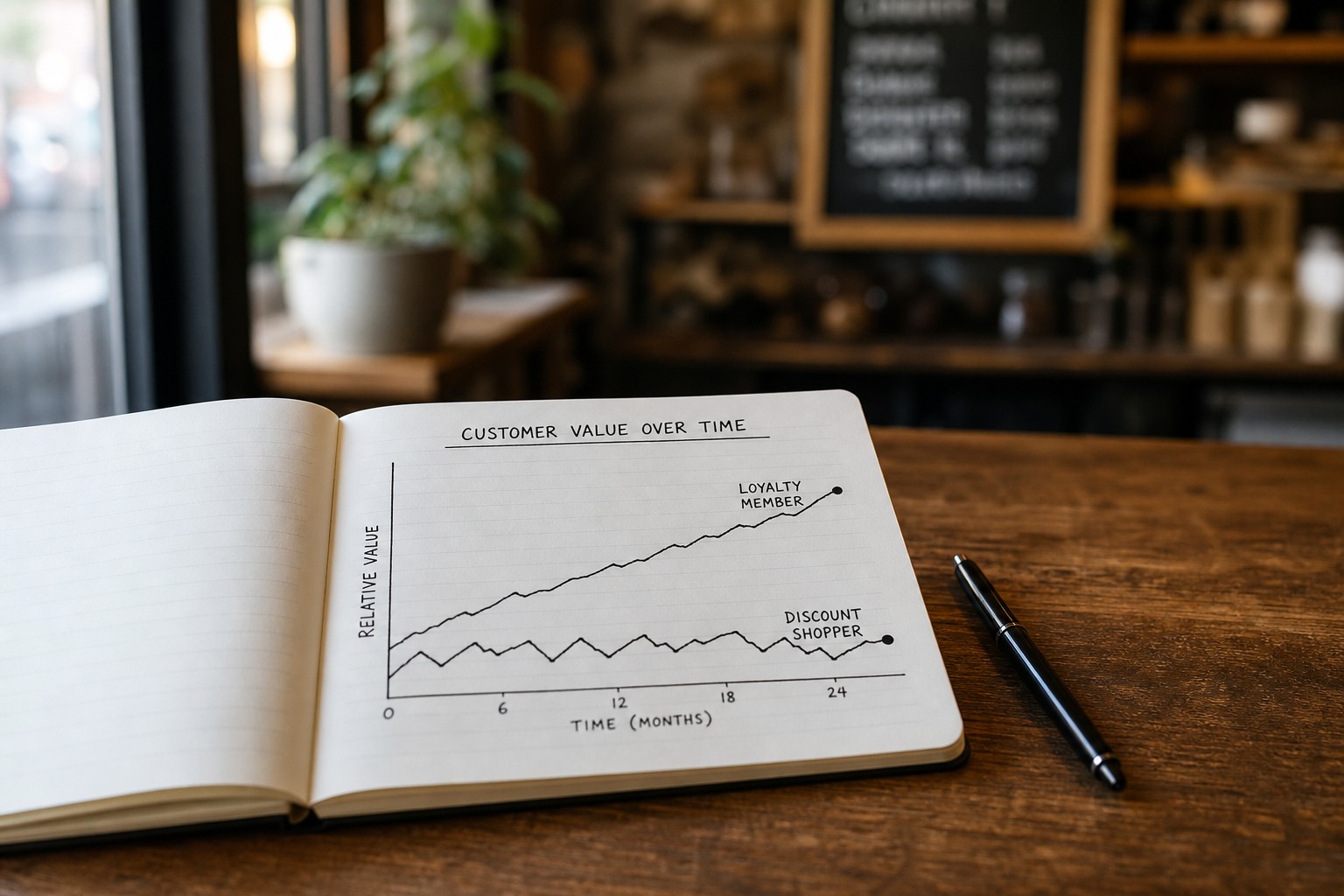
Loyalty programs train a different behaviour entirely - membership itself changes spending behaviour, independent of any price reduction. The reward structure creates a reason to return that has nothing to do with chasing the next markdown.
Long-Term Brand Perception: What Each Strategy Signals to Customers
Every retention tactic sends a signal about how a business sees its own value.
Constant discounting signals uncertainty. It tells customers that the “real” price is negotiable and that patience will be rewarded with a better deal eventually.
A loyalty program signals confidence. It tells customers the product or service is worth the full price, and that sticking around gets rewarded through recognition and earned benefits rather than a race to the lowest number.
41% of consumers say the primary reason they stay loyal to a brand is because it offers a loyalty program - ahead of high-quality products (33%), great customer service (8%), and brand values alignment (7%). Source: EY, 2025, via Access Development
Members of loyalty programs are 85% more likely to continue doing business with a brand, and 74% say they modify their spend to maximise program benefits. Source: Bond Brand Loyalty, 2025, via Access Development
When Discounting Still Makes Sense for a Small Business
None of this means discounting is always the wrong call. There are specific situations where a well-timed discount is genuinely the right tool.
- Clearing ageing inventory that’s tying up cash flow or shelf space
- Seasonal promotions tied to a specific event, like end-of-financial-year or a holiday period
- One-off acquisition campaigns designed to get first-time visitors through the door, with a plan to convert them into regulars afterward
- Slow periods where filling capacity at a reduced margin still beats an empty table or shelf
The key difference is intent. These are time-limited, specific-purpose discounts, not a default retention strategy running on a loop.
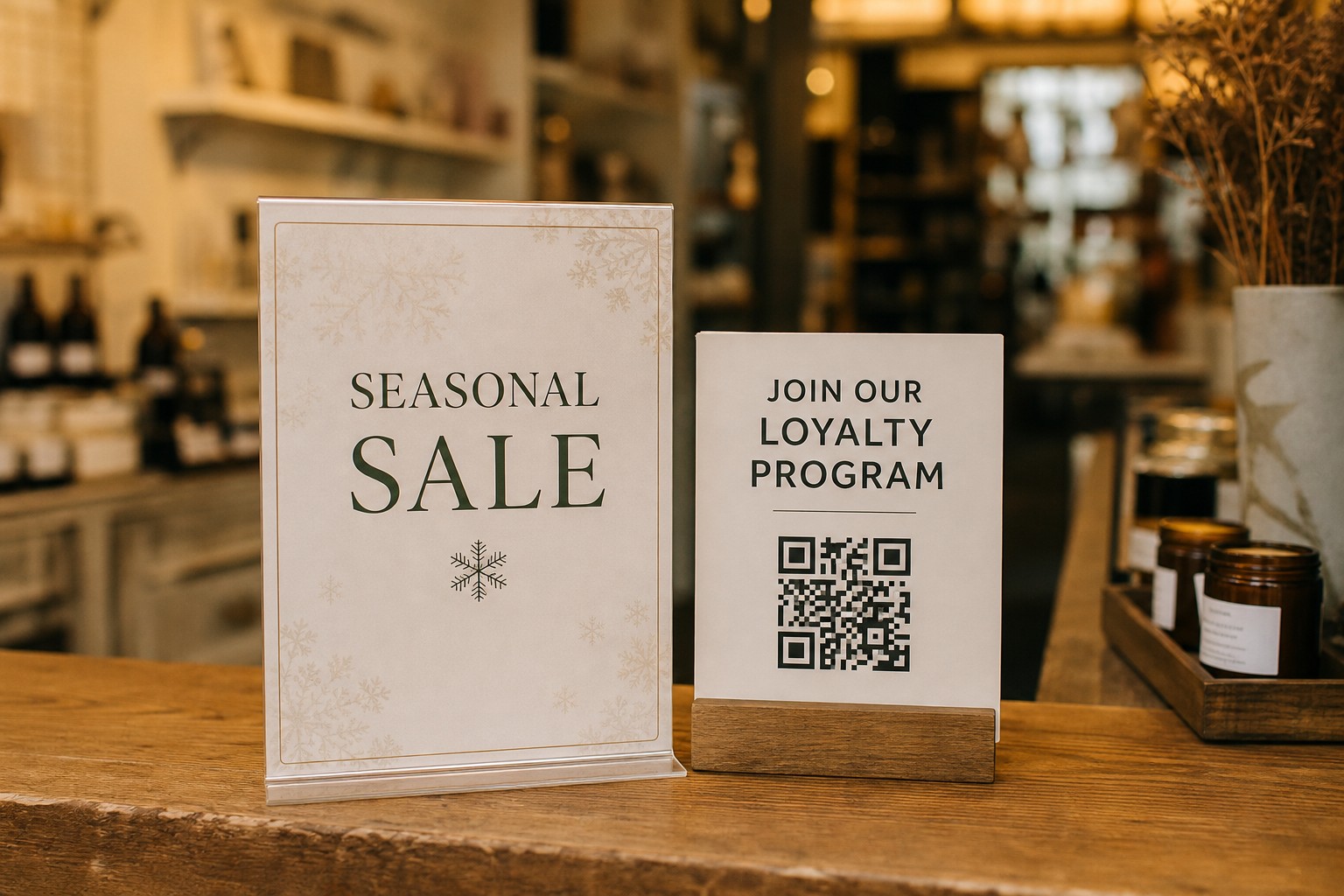
Used this way, discounting and loyalty can actually work together. A one-off discount can be the hook that gets a new customer through the door, and a loyalty program is what keeps them coming back afterward without needing another price cut.
When Loyalty Is the Better Tool for Small Business Retention
Loyalty tends to outperform discounting as a retention tool when:
- You already have a base of repeat customers you want to reward without eroding margin
- You’re trying to increase visit frequency rather than just win a single transaction
- You want data on who your best customers actually are, not just who responded to a sale
- You’re competing on service and experience rather than being the cheapest option in your area
- You want a retention system that runs in the background, rather than manually managing promotions
Once a customer relationship has gone quiet altogether, loyalty mechanics alone may not be enough to bring them back, which is where a structured win-back campaign becomes the more appropriate tool. Loyalty and win-back strategies serve different points in the customer journey, and understanding that distinction helps you apply the right fix at the right time.
Building a Loyalty Program Without Touching Your Pricing
Setting up a loyalty program doesn’t require restructuring your pricing or building anything from scratch. Modern loyalty platforms handle the mechanics, the customer data capture, and the automated follow-up, so the business owner can focus on running the shop rather than managing a spreadsheet of punch cards.
A typical setup process looks something like this:
- Choose a reward mechanic that fits your business, whether that’s a stamp card, points system, or membership tier
- Customise it with your branding so it feels like a natural extension of your business
- Promote sign-ups at the point of sale or through existing marketing channels
- Let automated messages and notifications bring customers back without manual follow-up
- Scan and validate visits to track who’s engaging and how often
- Watch repeat visits increase as the reward structure kicks in
You can see the full breakdown of this process on LTV Loyalty’s how it works page. If you want to compare plan structures and what’s included at each tier, the pricing page lays out the options without any lock-in contracts.
Businesses that want more detail on program design and retention strategy generally can also check the resources library, or book a demo to see how a loyalty program would actually look running in their own business before committing to anything.
This decision is one piece of a broader retention system - see our complete guide to customer retention for small business for how loyalty design fits alongside churn tracking, win-back campaigns, and repeat customer rate.
Conclusion: Choosing Between Loyalty and Discounting
The loyalty-vs-discounting decision doesn’t have to be all-or-nothing. Discounting still has a place for clearing inventory, running seasonal promotions, or making a one-off push for new customers.
But as a default retention strategy, discounting quietly erodes margin, trains customers to wait, and attracts shoppers who were never going to be loyal in the first place. Loyalty programs work differently by rewarding behaviour that’s already happened, which protects margin while reinforcing the habits that turn occasional visitors into genuine regulars.
If your business is still relying on discounts to keep customers coming back, it’s worth testing what a structured loyalty program could do instead, starting with a look at how the mechanics actually work.
Frequently Asked Questions
Is a loyalty program better than discounting for a small business?
For ongoing retention, yes. Loyalty programs reward customers for behaviour they’ve already shown, while discounting gives value away upfront regardless of whether the customer was ever going to return.
How much does discounting actually cost a small business?
Discounting costs more than the headline percentage suggests, because it comes directly out of margin rather than revenue. A 15% discount on a low-margin item can remove a much larger share of actual profit than owners often realise.
Do loyalty programs work for cafes and small retail shops?
Yes. Stamp cards, points systems, and membership tiers are widely used by cafes and retail businesses specifically because they reward repeat visits without requiring a price cut on every sale.
Can I use both a loyalty program and discounts in my business?
Yes, and many small businesses do exactly this. A one-off discount can attract a new customer, while a loyalty program is what keeps them returning afterward without needing another markdown.
What’s the difference between a loyalty program and a discount card?
A discount card typically applies a set price reduction, while a broader loyalty program can include points, stamps, cashback, membership perks, and referral rewards, all structured around rewarding repeat behaviour over time.
Will a loyalty program actually reduce how often I need to discount?
In many cases, yes. Once customers have a reason to return that doesn’t depend on price, businesses often find they can rely far less on frequent promotional discounting to maintain foot traffic.
How do I know if my small business needs a loyalty program instead of discounts?
If you’re discounting regularly just to bring back the same customers, that’s a sign a loyalty program would likely serve you better, since it rewards the same repeat behaviour without the recurring margin hit.